[:en]
22 May (Sunday)
19.00 – Schaubühne (Berlin/Germany),An Enemy of the People, director: Thomas Ostermeier (2h 30′ without interval, CKK Jordanki)
“Everything is focused; nothing is overstated. This is vital and purposeful theatre, a perfect example of its kind.”
John Branch, “Huffington Post”, 19.11.2013
“Schaubiihne director Thomas Ostermeier has created a conclusive and contemporary rendition of lbsen’s seasonal favourite An Enemy of the People (…). Credit must also go to dramaturge Florian Borchmeyer, whose intelligent, slimmed-down version of the original is, much in the spirit of Ibsen himself, imbued with contemporary social criticism on the myth of the economic boom and on the generał trend towards the individualisation of living conditions. (…) Ostermeier and Ibsen are seemingly a perfect fit.”
Stefan Kirschner, “Berliner Morgenpost”, 09.09.2012
“Years after its initial production, Henrik lbsen’s An Enemy of the People, has lost little of its topicality. Quite the contrary: The piece hits a contemporary nerve. Thomas Ostermeier stages a striking amalgam of the despotic world of finance, with its manipulations and nepotism and questions what is truth in an economically designed world. (…)”
Frauke Vogel, RBB Inforadio, 09.09.2012
“What is right, what is better: to the barricades or the sofa? This is not just a rhetorical question which one uses to join in the debate, in order be part of the generał discourse. Ostermeier is serious, you see it in the finał scene, in certain subtleties, in the sudden change of temperature in the gestures and the glances.”
Dirk Pilz, “Berliner Zeitung”, 10.09.2012
23 May (Monday)
17.00 – Teatr im. Wilama Horzycy (Toruń/Poland), The Gates of Paradise, director: Krzysztof Rekowski (1h 45′ without interval, TWH Small Stage)
“It’s a story of five children, who have left from village Cloyes near Chartres (south of France) towards Jerusalem in spring 1213, in order to free up the tomb of Christ from pagans’ hands. Shepherd Jacob called a crusade. He believed, that innocence and chastity would be a weapon of young crusaders during the battles with infidels. Majority of youngsters perished in the course of roam, part of them has run to captivity. (…)
From the very beginning nothing is innocent and upright in these children. Krzysztof Rekowski, a director of a production at the Horzyca Theatre, has focused on mutual relations among heroes. There are lies and betrayals, hot passions and bitterness of rejections. Rekowski creates a dynamic story from contradictory accounts, which lights events up from different sides. Children makes a confession during their roam, and we are informed, that a whole expedition is only one great mystification. Anecdotal construction causes, that this performance is a show of theatrical skills from the Wilam Horzyca Theatre’s actors. (…)
The Gates of Paradise is read as a story about religious frenzy, and that everywhere absurd political ideas can appear, independently of times and cultural realities. This crusade, though in ground of thing ungodly, cruel and dishonest, is needed by everybody. It’s a collective experience, and all people hanker after that. This production could be read as a one more statement intended against religious fundamentalism and policy, which pitilessly makes a convenience of people devoted to their ideas. But this would be too simple for Rekowski. By no accident theatre
director has sorted forms of contemporary costumes for the actors. Young heroes meet the most actual and universal problems.”
Grzegorz Giedrys, “Gazeta Wyborcza Toruń”, 23.10.2015
23 May (Monday)
19.30 – Rimini Protokoll (Berlin/Germany), Mein Kampf, director: Helgard Haug, Daniel Wetzel (2h without interval, Olimpijczyk)
A stage version of Hitler’s rambling manifesto is attracting big audiences, months before its copyright expires and a new academic edition is published.
“I’ve tried the line ‘Do you want to read Mein Kampf with me?’, but I can tell you it doesn’t work,” said Alon Kraus, the son of Holocaust survivors and one of six protagonists in a bold stage version of Adolf Hitler’s Nazi manifesto (…). A re-enactment of the 44-year-old Israeli lawyer’s real-life attempts to seduce a German tourist on the Sinai peninsula by reading extracts from Hitler’s rambling racist discourse raises the loudest – albeit hesitant – laughs.
To mark its – nervously awaited – first reissue in Germany since 1945, two Berlin theatre directors decided to look into why Mein Kampf continues to fascinate. (…) Applying its much-praised “documentary theatre” technique – where topics are developed through intense journalistic-style investigation – the group started off “by asking which of us had read it and who had a copy lurking at the back of a bookshelf or in their attic”, Helgard Haug, a director with the Berlin-based theatre collective Rimini Protokoll, said. (…)
Interviews with lawyers and historians, antiquarian booksellers and the actors’ own families, accompanied by archaeological-style digs everywhere from back gardens to attics, form the backbone of the play. (…)
Rimini’s explorations took (…) [them] to destinations as far afield as the International Antarctic Centre’s library and a bookstall in Bangalore. They found Mein Kampf everywhere (…); in Japan and Turkey, which have manga versions; and in India, where business students are advised to read it as an introduction to modern management. There is also a Hebrew version available for academic study in Israel.
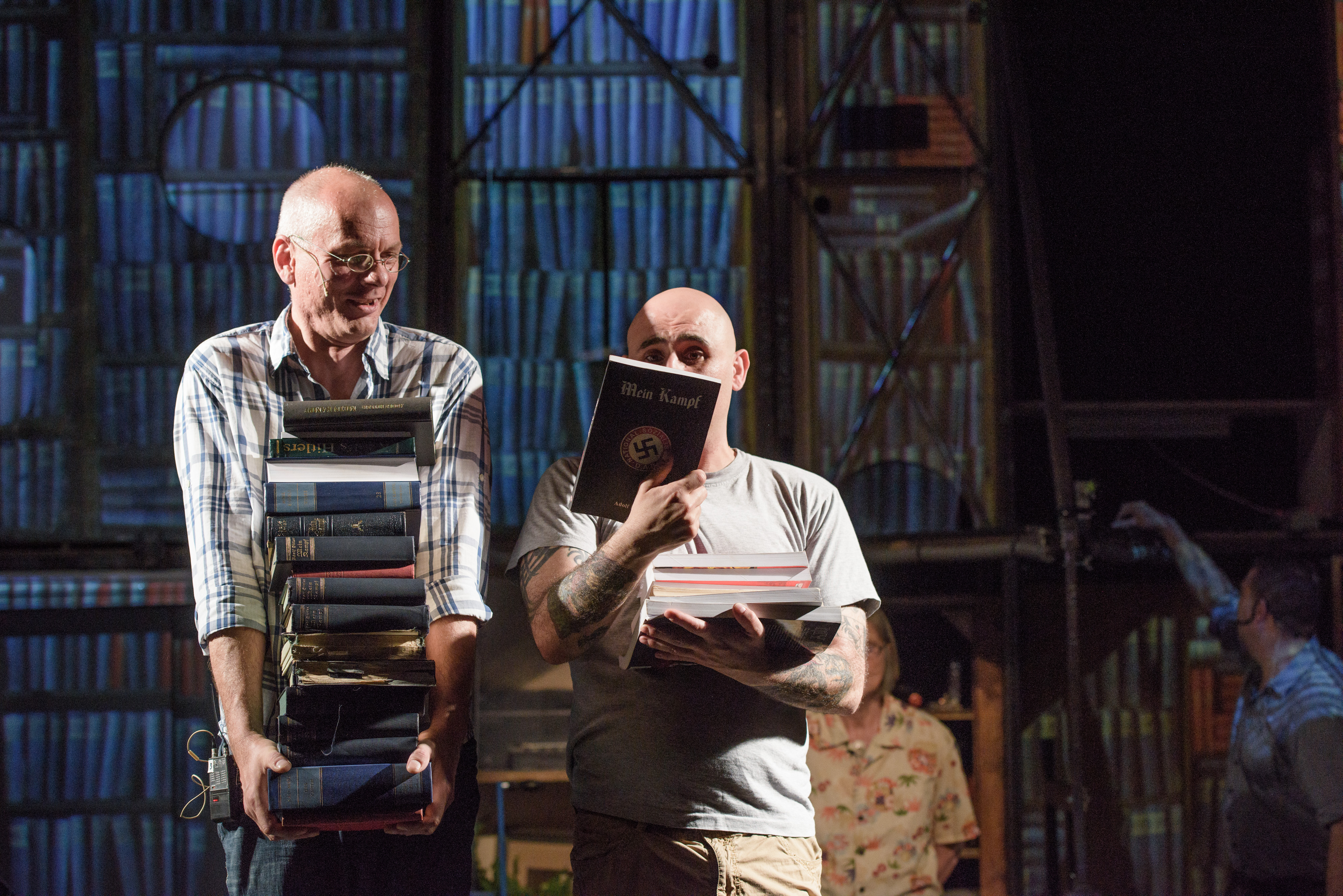
The editions Rimini Protokoll collected are on book shelves of the play’s set. At one point on stage, Christian Spremberg, the blind musician, runs his fingers over a huge braille version from the 1930s and recites some of antisemitic passages, first in a gentle tone then in an insistent bark. As the protagonists toss editions to each other across the stage – a gold-rimmed one for newlyweds, another on thin paper for soldiers – the audience learn more than 12m copies were sold from (…) 1925 until 1945. (…)
As to Hitler, it is well-documented that Mein Kampf made him a fortune – more than 12m reichsmark (…). Kellerhoff has discovered, because he avoided paying much of the tax due on it. A year after coming to power in 1934, he received a demand for 405,494.40 RM, based largely on book earnings. But he never paid and the following year, was struck from the tax records altogether. “No one has so far been able to discover what happened to the tax man who was bold enough to send him that demand,” said Kellerhoff.
Kate Connolly, “The Guardian”, 03.11.2015
24 May (Tuesday)
18.00 – De Warme Winkel (Utrecht/Netherlands) Gavrilo Princip, direction: De Warme Winkel i Marien Jongewaard (2h without interval, CKK Jordanki)
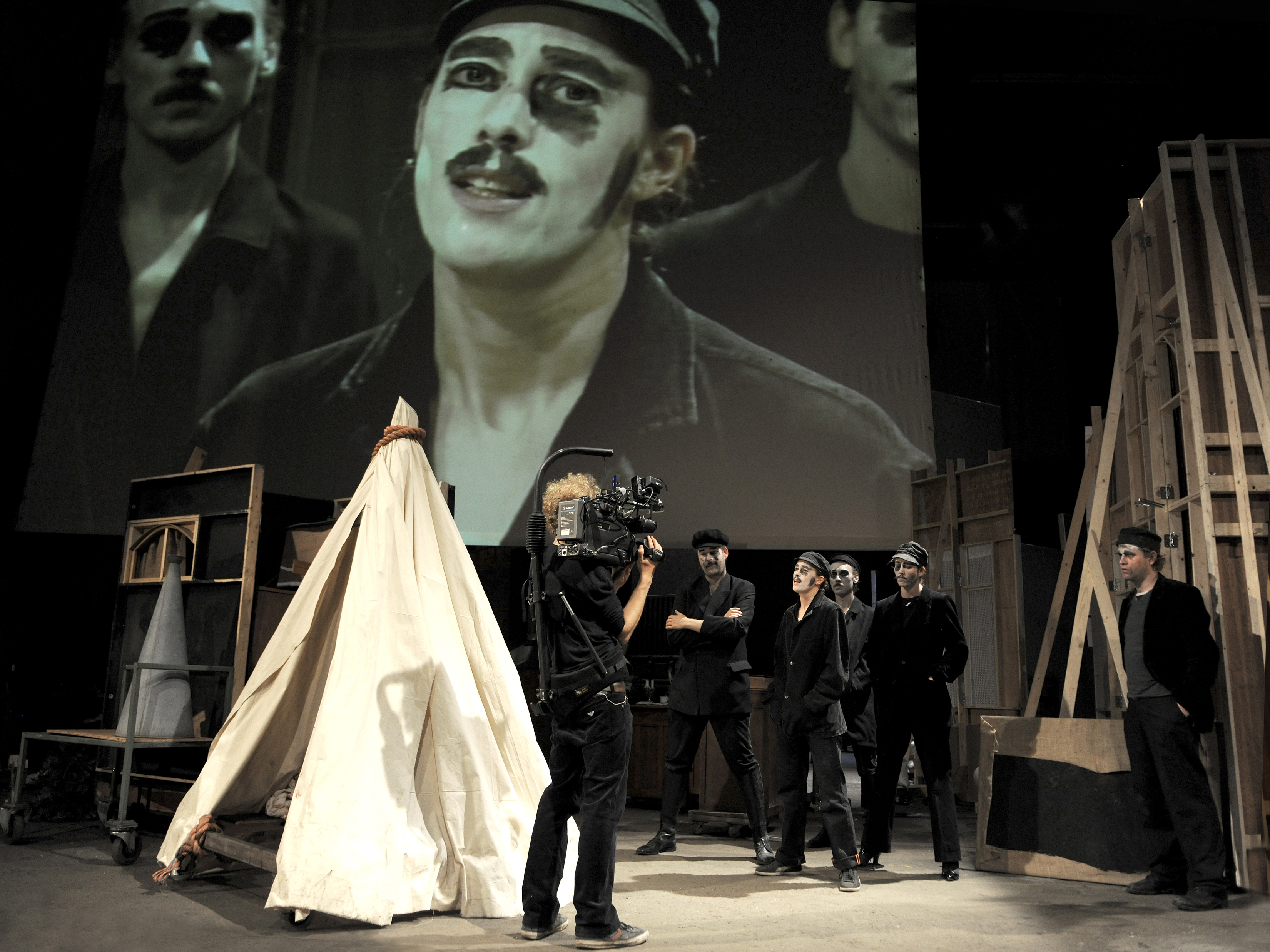
The décor of Gavrilo Princip stands with its back of plain timber partitions away from its spectators. In its heart, the playing field on which actors of De Warme Winkel bring a dramatic narration about Gavrilo Princip, murderer of Franz Ferdinand. A secret world where revolutionary plans blossom, changing the course of history forever. Through a camera we get to see images of black made up idealists, practising with pistols and proving each other blood brotherhood. Before the theatrical-anarchistic performance begins, actress Mara van Vlijmen counts down, from now, 2014, till then, June 28, 1914. She also recites the numerous sources of inspiration for their Gavrilo. Two endless sequences, in their factual simplicity of great expressiveness. The chaotic atmosphere gives us the insight that history doesn’t follow a logical path, but is a succesion of coincidences.
Jeroen de Man is great in voicing provocative political language and Vincent Rietveld at the end is an anti-heroic, broken Gavrilo who misses his books in his isolation cel. Less powerful is the unnecessary actualisation at the end: the spectator is intelligent enough to discover the parallels with the present day situation. The court scene on the other hand, is touching, with its corrupt judges to which Princip is handed down. He refuses to repent. With a dark gaze he looks at us, if from the depths of history, which suddenly comes incredibly close by: 1914 touches 2014.
Kester Freriks, „NRC”, 23.04.2014
24 May (Tuesday)
20.30 – STAN (Antwerp/Belgium), The Cherry Orchard, direction: STAN (2h 20′ without interval, TWH Main Auditorium)
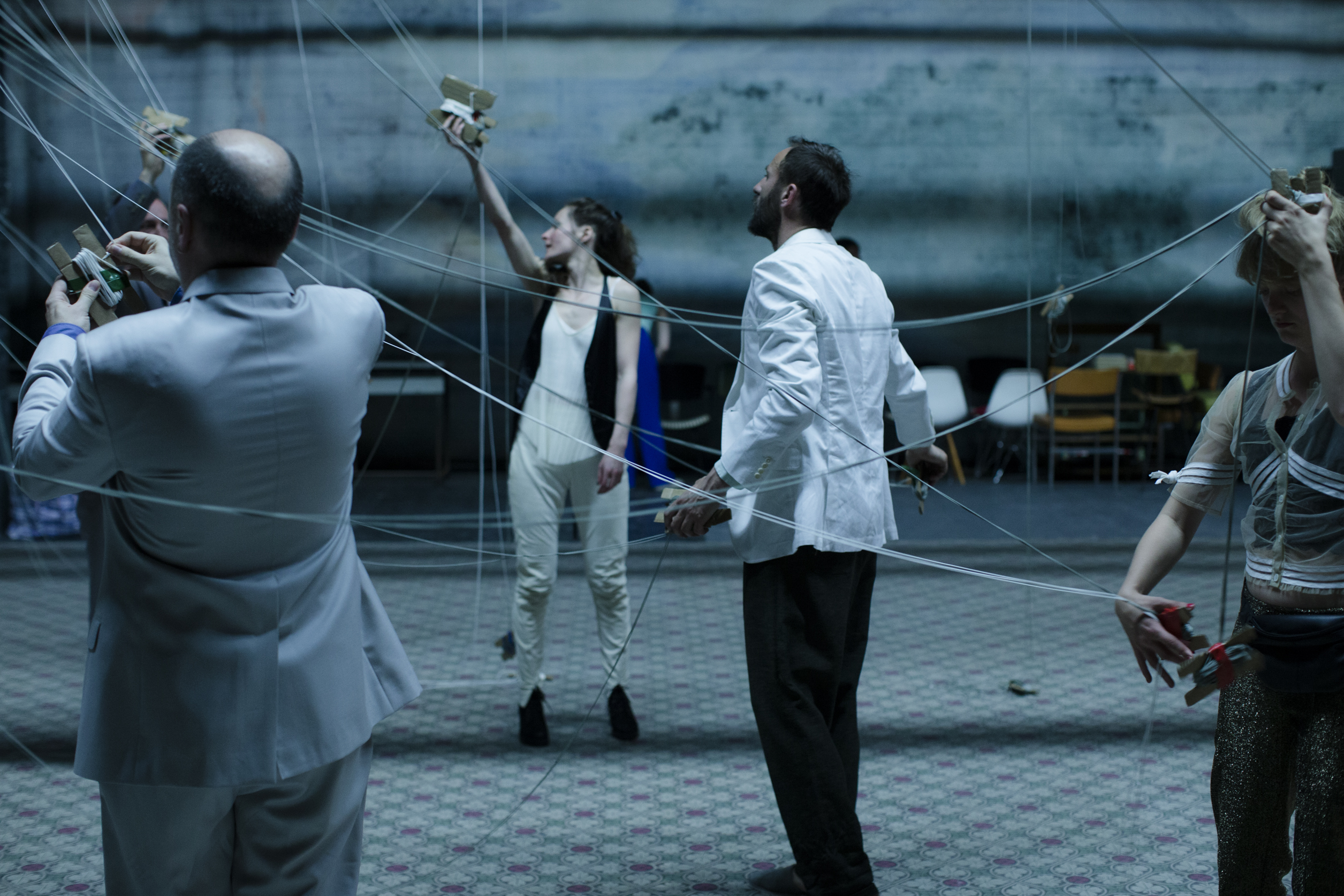
Tg STAN fills its large-scale adaptation of The Cherry Orchard with ten actors, spectacular lighting, window frames on wheels, a Persian carpet and long blinds. (…)
With some frivolity the actors allow the borders between story and reality, character and actor to blur. In the middle of the scenes they perform the set changes, they criticize the late appearances of their opposite number and occasionally Stijn Van Opstal even mutters stage directions. (…)
The most beautiful moment is the morning after the sale of the house when departure is imminent. The emptiness is foisted upon us with the inhospitable light of a single bulb, the house blows out its last candle when the plot has just got under way. With a fragile beauty The Cherry Orchard sketches an almost poetic picture of human experience.
Maarten Luyten, “Cutting Edge”, 21.05.2015
Thirteen characters people the stage. Van Opstal and Haelvoet play a couple of double roles. They dothis by announcing it and putting on a different jacket. (…)
They drag the large windows from one side to the other, they move long tables, they pull up the highvenetian blinds and gradually let them down (…). There are even a couple of conjuring tricks: a flame here, a cloud of smoke there, a pair of trousers that disappears, a woman floating on balloons. (…)
With tg Stan it is a comedy, reinforced by additions, but a comedy with a melancholic undertone. (…)
Is it a tragedy of human impotence? Of loss?
Tuur Devens, “De Theaterkrant”, 21.05.2015
25 May (Wednesday)
19.00 – Theater Mitu (New York/USA), Juárez: A Documentary Mythology, director: Rubén Polendo (1h 35′ without interval, Od Nowa)
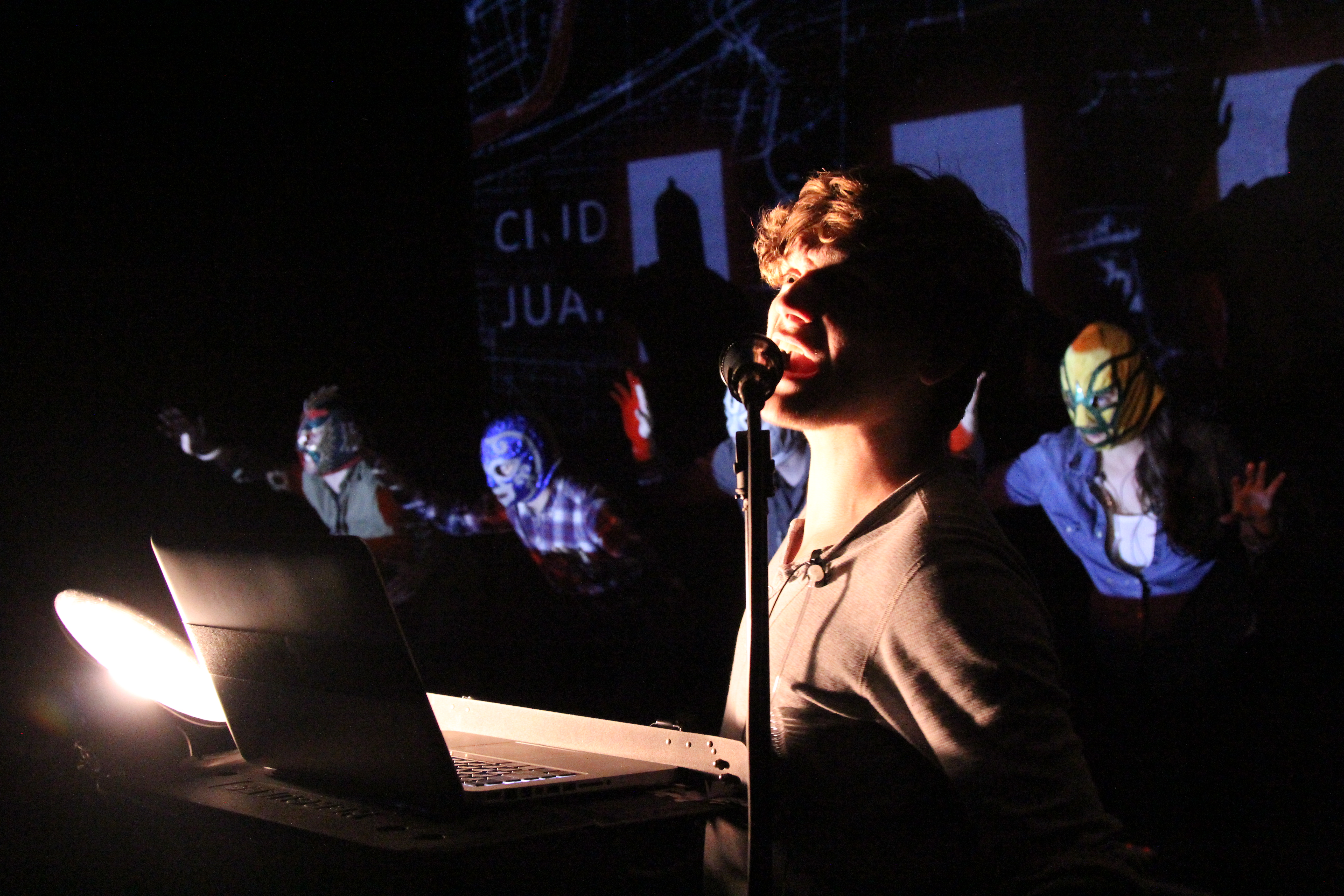
“The experimental theater group Theater Mitu focuses their gaze on Ciudad Juárez in Mexico, where its artistic director Rubén Polendo was born and raised. Developed over two years and using over two hundred hours of interviews from students, grandmothers, activists, gang members, and even government officials of Juárez, Theater Mitu weaves together an intricate and personal tapestry of this city besieged by violence (once named the murder capital of the world), which connects to America via its sister city in El Paso, Texas; NAFTA; and the war on drugs.
Sextet athletically manipulates the lights and stage design before our very eyes while giving voice to the countless witnesses to the violence and changes In Juárez. Utilizing multimedia and impressive projections (video design by Adam Cochran & Justin Nestor) and intricate sound design (Alex Hawthorn), the performers construct deceptively Simple yet haunting stage images, such as that of a human body being tortured with a plastic tarp soaked in gasoline. (…)
This ninety-minute performance is composed of four distinct sections: ‘Context,’ ‘Memory,’ ‘Violence,’ and ‘Change.’ In ‘Context,’ we are given an avalanche of facts about Juárez, including population, longitude, and latitude (…).
The second section ‘Memory’ is almost entirely sung-thru (music composed and directed by Adam Cochran), and is made up of humorous stories about the history of Juárez, as well as creepy stories involving ghosts and witchcraft. Some of these, while entertaining, are a prelude to the true-life horror stories that make up the following section, ‘Violence.’ In this haunting third section, we hear gruesome accounts from victims and those who perpetrated violence upon others. No one is safe and it seems everyone is suspect, including government officials who stand to benefit from the violence as much as the cartels they are supposedly fighting. Throughout this section, we are introduced to femicides – murders against women (…) and to the major cartels which terrorize the region, all framed as if we are watching a wrestling match.”
Teddy Nicholas, “Theatre Is Easy”, 09.08.2014
26 May (Thursday)
16.00 – Teatr Modrzejewskiej (Legnica/Poland), Adolf Nowaczyński The False Tsar , director: Jacek Głomb (2h’ without interval, Olimpijczyk)
“A street row with two bands of scoundrels, who compete for favours from king of district. This Polish band was honourable, pathetic, in a stupid love with uhlans’ whim, and held natives in contempt. The second one, together with prince Szujski (Paweł Wolak’s genuine creation), turned out servility and humble (…) – and finally they triumphed with whole brutality of victors. Let’s anybody say, if we don’t practise this scheme getting daily news.”
Jacek Sieradzki, “Zwierciadło”, 2015 nr 11
“There are no feats in politics, but only business and accounts of profits and losses. No principles act – apart from cynicism, greed, vengeance, authoritative rules and egoism. Communication among cultures is a fiction of dreamers. It’s predominated by xenophobia, contempt, religious hysteria, fear (…). It is necessary to appreciate two important questions in this production: about egoism of politicians and about courage of those, who are repairing world. Answers are absolutely traumatic, so as many passion, regrets, bitterness, disgrace and pride is in almost final, blustering Marina’s dance in the company of courtiers. What tumults of frenzy, madness and desperation sounds of those, who are puppets in hands of sovereign, and maybe in hands of authorities.”
Leszek Pułka, “Teatralny.pl”, 21.09.2015
26 May (Thursday)
19.00 – SN Theatre Drama/City Theatre/Cankarjev dom (Ljubljana/Slovenia), The Iliad, director: Jernej Lorenci (3h 1 interval, CKK Jordanki)
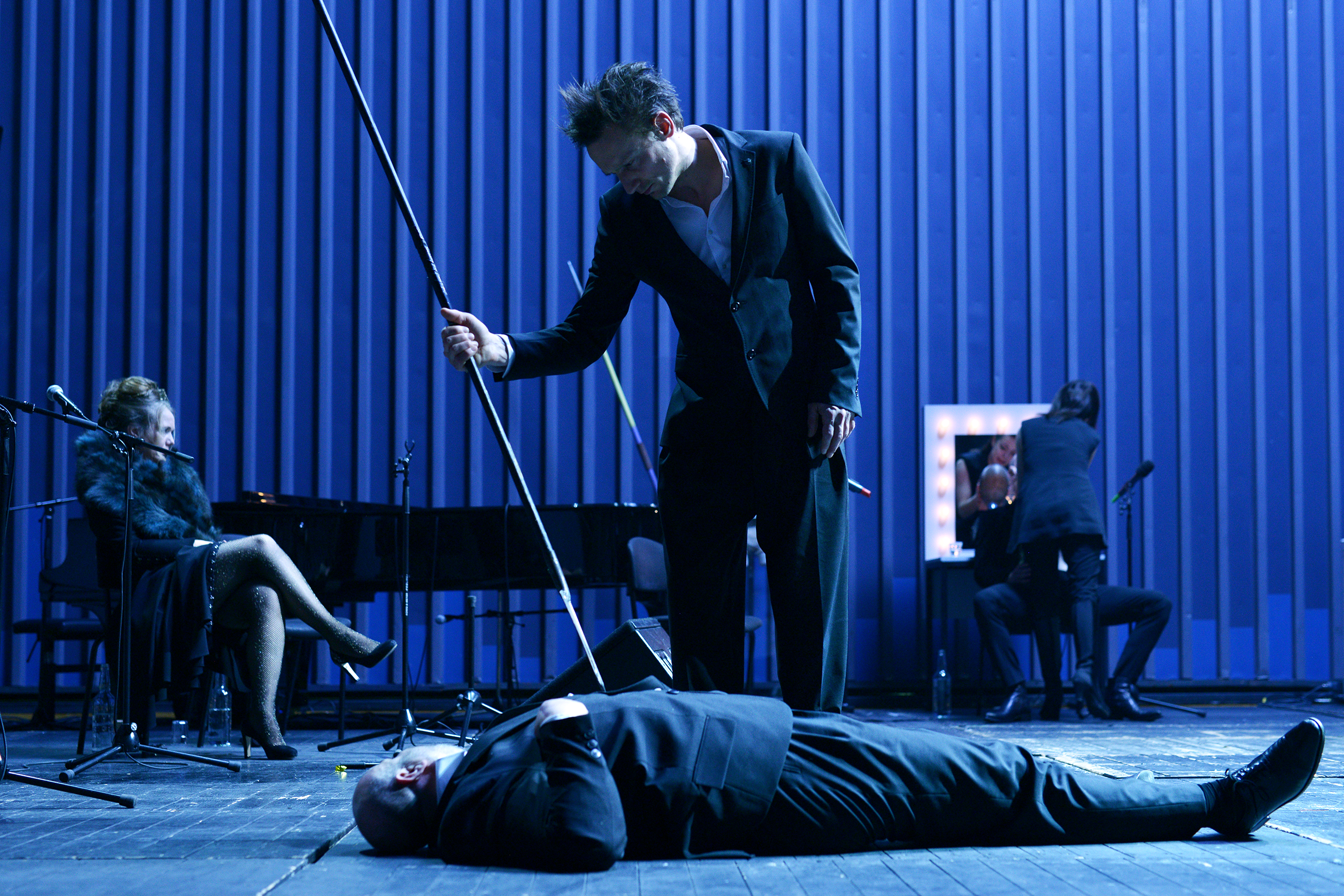
“The Iliad from the Slovenian National Theatre is innovative and magnificent, as much classical as inspired by European theatre avantgarde, with subtle hints of the contemporary history of the Balkans. The performance begins as a concert version of an opera, the actors (in formal wear) sitting on plain chairs, narrating the bloody history of The Iliad into microphones. The mics are not there just to enhance the sound of words: the whole performance is built from music and the rhythm of the hexameter, similar to heart beat or the sound of pounding horse hooves. The
narrated intro slowly evolves into a total theatre experience with a universal relevance bound to be recognized by all audiences.”
Margareta Sörenson, International Association of Theatre Critics, 20.09.2015 (49. BITEF Festival in Belgrade)
“Lorenci… has taken all that Balkan has kept from the ancient tradition: folk epics, stories about our ancestors’
characters and deeds told in hexameters on bagpipes. That is why his Iliad has turned into a sort of human cabaret in which it is danced, sang and died to the fantastic music by Branko Rožman.”
Katja Perat, »Mladina«, 30.01.2015
27 May (Friday)
17.30 – (Santiago/Chile), Access, direktor: Pablo Larrain (1h without interval, Od Nowa)
“His name is Sandokán, like the fearless hero of Emilio Salgari’s novel. He is travelling by municipal minibuses, moving from one to second, loaded with cheap products and the fair dose of the social dislike, which isn’t also coming from nowhere. He is getting onto a bus, for 30 seconds is trying to sell the book, and then forgets about the promotion and moves on to more serious themes: he will tell us the drama of his life. This miserable biography can reveal everything: from the sexual abuse in the childhood to the violence and robbery.”
Rodrigo M. Gonzáles, “Latercera”, 05.04.2014
“One more time Roberto Farias is proving in this role that he is an unrestrained, extraordinary and wild actor who can go from tenderness to assaults, from the humility to the greatest coarseness and the cruelty. We already knew from our experiences that this actor can reach all limits and go farther. He is one from few which are able definitely to absorb the entire series of diverse, complex and intense characters. (…) he has an ability of leading stories in which the majority of actors would go in too black direction or would transform into a caricature (…). In Access Roberto
Farías, with his extraordinary flexibility, is achieving the effect of merging history fragmented and as dangerous as a broken mirror, which – if won’t wound you – it will disfigures your face (…). The spectator is experiencing with him a kind of violent and full of emotions catharsis: he finds himself suddenly in a narrow backstreet on which in fact he will probably never walk and which is not at all like the TV version of reality (…).”
Arturo Ledezma, “La Prensa”, 10.05.2014
27 May (Friday)
19.30 – Teatr Miejski (Reykjavik/Iceland), The Seagull, director: Yana Ross (3h, 1 interval, TWH Main Audience)
“When classics are treated with such a radical reconstruction and relocation as is done in this production, the responsibility lies entirely with the ensemble and the artistic directors. Does the relocation work? Does the outcome possess theatrical power that justifies that which is lost in the reconstruction? (…) At the end of the day the words of former artistic director of the British National Theatre, the arch-conservative Sir Peter Hall, apply: If the reconstruction is not successful, the original work stands unaffected and mocks the theatre people for not trusting the text or themselves to stage it, because of lack of understanding, plebism or laziness.
However, a successful transformation of classical works (…) is the fresh breath of reconstructions, of course, valuable in itself. The Seagull by Yana Ross, and perhaps not least by those who have re-created the text, is truly a theatrical inspiration.
The essence is there although the events have been transferred from Russia during the turn of the century in 1900, into Icelandic modernity. (…)
I think my favorite scene in the show is his conversation and with Konni/Konstantín in the first act, where the drunk and melancholic doctor tries to tell disappointed young artist how his failed performance touched him deeply. (…)
Zane Pihlström‘s set design, Filippía Elísdóttir‘s costumes, Björn Bergsteinn Guðmundsson‘s lights, Gísli Galdur Þorgeirsson‘s music and the effort of so many more people, culminate in a great show. The magic itself – i.e. what makes this crazy show and daring experiment such a successful theater evening – is indeed invisible in the air between the actors on stage and between the words of dr. Chekhov, written in the cherry orchard at Melikhovo in the winter of 1895 (…).”
Þorgeir Tryggvason, „Morgunblaðið“, 19.10.2015
“(…) how natural and effortless the actor‘s language sounds! In this production there is cause and effect, a reason for very single word, it springs from thought and a feeling and awakes new emotions. Such treatment of language awakens tension by itself and is exemplary!”
Jakob S. Jónsson, “Kvennablaðið”, 2015
28 May (Saturday) (and 29 May)
18.00 – Peeping Tom (Brussels/Belgium), Father , director: Franck Chartier (1h 30′ without interval, CKK Jordanki)
So beautiful cruelty
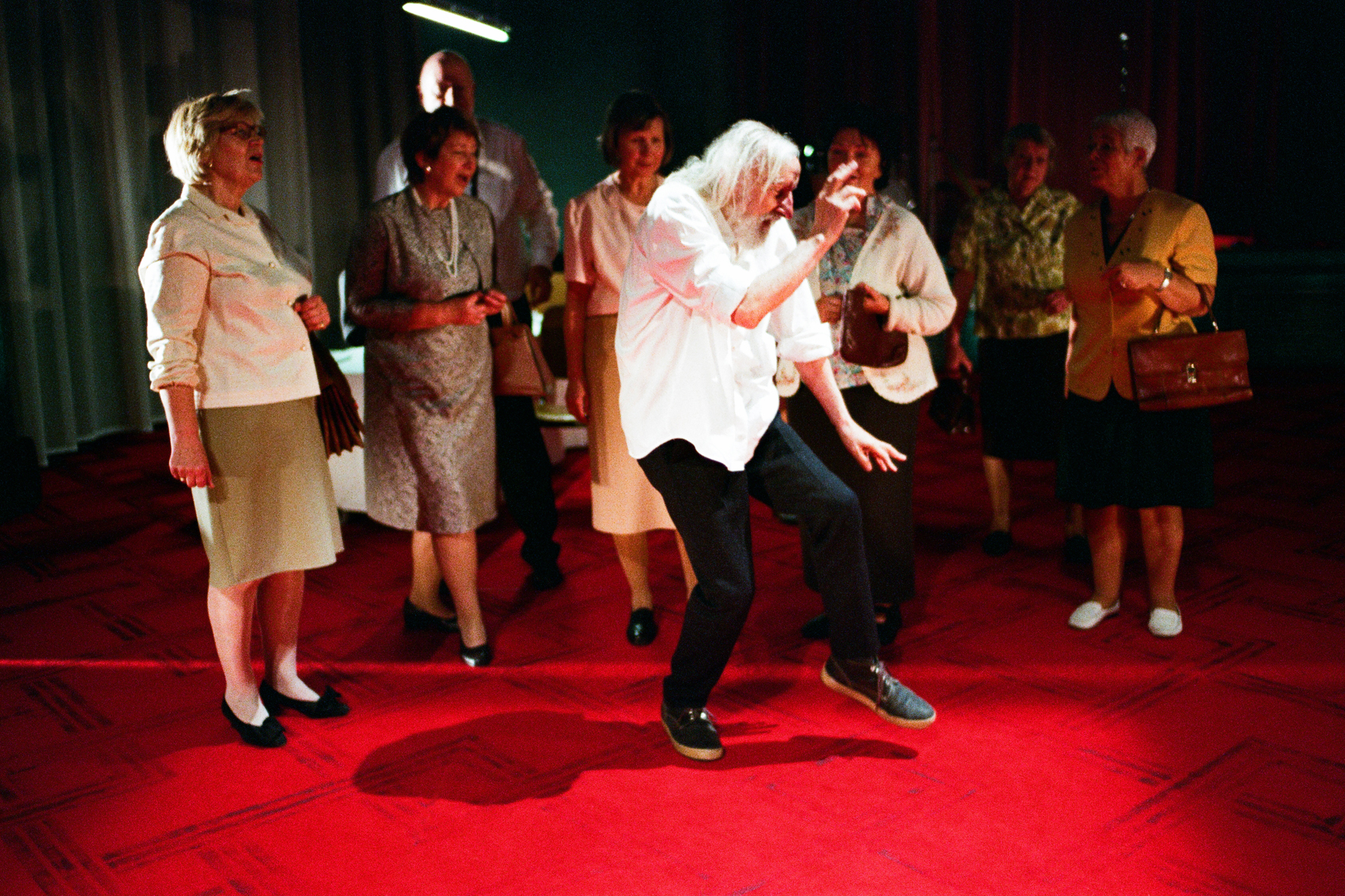
Wednesday night the retina of the public who filled the Mercat de les Flors [Festival Grec in Barcelona] was trapped by the heart-rending images of Vader (Father). The beginning of the show can’t be more cruel: a son leads his father to asylum dragging him on the ground. The old man with Alzheimer’s disease, masterfully acted by Leo De Beul (66-years painter, who had never put a step on the floor of stage). He becomes the protagonist. (…)
Besides De Beul and other members of the company, we can see ten residents of Barcelona in the age from 60 up to 70 years: some of them make stage appearance for the first time, others had only done amateur performances.
Vader (Father) action takes place in the day-room of asylum. To describe a reality of the decrepitude of the human beings without falling into the melodrama is not easy task but Peeping Tom succeeds: their sobriety grotesque is beautiful. (…)
As for the six members of the company they are, at once, magnificent dancers, actors and acrobats. Dancing is violent and dynamic. Their bodies are thrown into space at an incredible speed; the floor is for them an airstrip, where knees, elbows and heads glide like spinning tops. This tough, brutal and aggressive dialogue also contains some sense of humour, such as in the sequence in which nurses will serve Thai soup elders. Then they uncover the big pot and head of an Asian dancer appears. It relaxes the viewer only for a few seconds because dancing Peeping Tom is shocking, cruel, beautiful… unforgettable.
Carmen Del Val, “El Pais”, 18.07.2014
A story as surreal, cruel, tender and profound as the one Peeping Tom brings, is hard to come by in the field of contemporary dance.
Isabelle von NeumannCosel, “Tanznetz.de”, 13.05.2014
[:pl]
22 maja (niedziela)
Schaubühne am Lehniner Platz (Berlin/Niemcy)
Henrik Ibsen Wróg Ludu
Reżyseria: Thomas Ostermeier
Doktor Stockmann odkrywa, że woda pitna i lecznicza jest skażona ściekami przemysłowymi. Żąda opublikowania wyników swych badań i przebudowania sieci wodociągów miejskich. Wpływowi obywatele i dziennikarze obiecują poparcie wniosku. Brat doktora, radny miejski, uważa, że wpłynie to negatywnie na opinię miejscowości uzdrowiskowej. Decydenci miejscy próbują zatuszować fakt zanieczyszczenia wody.
Lekarz hołduje zasadzie transparentności. Dla niego sprawa ta nie ogranicza się tylko do uzdrowiska stanowiącego zagrożenie zdrowotne, lecz dotyczy społeczeństwa jako takiego. Dramat Ibsena balansuje na cienkiej linii stanowiącej granicę między uczciwością i fanatyzmem. Do jakiego stopnia zasada transparentności przystaje do rzeczywistości skomercjalizowanego społeczeństwa?
Thomas Ostermeier , wybitny niemiecki reżyser prezentował spektakle trzykrotnie w Toruniu. Za „Ogień w głowie” Mayenburga otrzymał w 1999 r. III nagrodę festiwalu oraz nagroda tygodnika „Polityka”.
Czas: 2h 30 (bez przerwy)
Spektakl z polskimi napisami

fot. Arno Declair
23 maja (poniedziałek)
Teatr im. Wilama Horzycy (Toruń/Polska)
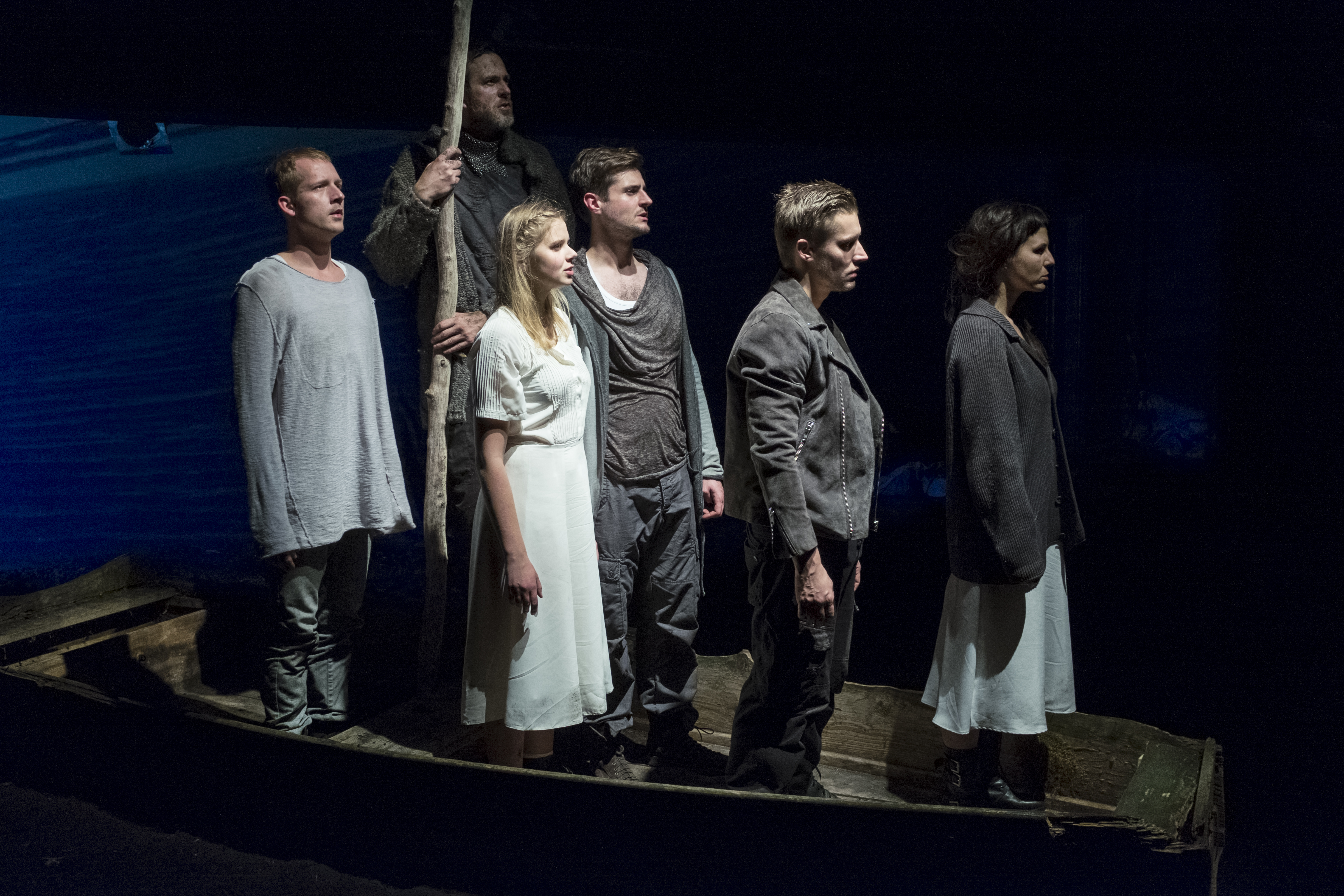
Jerzy Andrzejewski Bramy raju
Adaptacja i reżyseria: Krzysztof Rekowski
Każda miłość jest trudna. Zwłaszcza ta pierwsza, niepojęta, niespodziewana. Niejednokrotnie wiąże się z samotnością, brakiem akceptacji i zrozumienia własnego wyboru. Czym miłość jest dla młodej osoby? Fascynacją, zauroczeniem, pożądaniem, ale i poświęceniem siebie samego dla drugiego człowieka. Nie zawsze są to przyjemne motyle w brzuchu. Uczucie nieodwzajemnione i skryte staje się balastem i cierpieniem. Wtedy też człowiek jest w stanie zrobić wszystko.
Bohaterowie „Bram raju” Jerzego Andrzejewskiego, aby być blisko drugiej osoby, porzucają swoje rodziny i ruszają z misją wyzwolenia Ziemi Świętej z rąk muzułmańskich. Słynna krucjata dzieci z 1212 roku, wędrówka tysiąca dziewczyn i chłopców, dla niektórych w rzeczywistości okazuje się rozliczeniem z własnymi uczuciami. To historia o pięciu różnych obrazach miłości. O wierze, nadziei i miłości, które potrafią zgubić, ale i dać wolę do walki, do wielkich czynów. Nawet tych z góry skazanych na porażkę.
Czas: 1h 45 (bez przerwy)
fot. Wojtek Szabelski/freepress.pl
Rimini Protokoll (Berlin/Niemcy)
Helgard Haug, Daniel Wetzel, Mein kampf na podstawie Adolfa Hitlera
Reżyseria: Helgard Haug, Daniel Wetzel
Rimini Protokoll idzie tropem napastliwych tekstów Adolfa Hitlera, starając się zrozumieć i dać wyjaśnienie dla głęboko zakorzenionego mitu „Mein Kampf” (Moja walka). Książka Adolfa Hitlera została opublikowana w latach 1925-26. Pod koniec II wojny światowej krążyły po świecie miliony egzemplarzy. Przez dziesięciolecia ten propagandowy tekst otaczała aura „zakazanej księgi” i dlatego fascynuje do dziś. Strzeżone przez Wolne Państwo Bawarii prawa autorskie do tej książki wygasły z końcem 2015 r. Co leży u podstaw mitu „Mein Kampf”? Jakie właściwie treści są w niej zawarte? Czy ta książka jest nadal zagrożeniem? W swym najnowszym spektaklu, reżyserzy teatralni Helgard Haug i Daniel Wetzel szukają odpowiedzi na te pytania. Od uniwersyteckich szaf z literaturą zakazaną trzymaną pod kluczem, przez niemieckie strychy, po pchle targi za granicą, Helgard Haug i Daniel Wetzel podążają szlakiem książki, która do dziś zachowała swój wybuchowy charakter, zarówno pod względem historycznym, jak i politycznym.
Rimini Protokoll jest teatrem zaangażowanym. Realizuje spektakle o tematyce ważnej dla Europy. Czas: 2h (bez przerwy)
Spektakl z przekładem symultanicznym (słuchawki) na język angielski i polski.
fot. Candy Welz
24 maja (wtorek)
De Warme Winkel (Utrecht/Holandia)
Gawriło Princip
Reżyseria: De Warme Winkel/Marien Jongewaard
28 czerwca 1914 r. Gawriło Princip z grupą pięciu przyjaciół dokonuje zamachu na życie habsburskiego następcy tronu, Franciszka Ferdynanda, podczas jego wizyty w Sarajewie. Pistolety się zacinają, a granaty wybuchają zbyt późno bądź wcale; zamach kończy się porażką. Franciszek Ferdynand podejmuje decyzję o zmianie trasy wizyty. Wszyscy o tym wiedzą, oprócz kierowcy. Głodny i rozczarowany Gawriło wchodzi do piekarni. Gdy wychodzi ze sklepu, widzi jak samochód arcyksięcia przejeżdża tuż przed jego nosem. Nie ma czasu na wyciągnięcie pistoletu, ale, ku jego zdziwieniu, samochód zatrzymuje się i zaczyna manewr cofywania. Celny strzał, który zabija arcyksięcia, zaczyna wielką wojnę światową.
„Gawriło Princip” jest spektaklem o ginącym świecie, o idiocie, który obala elity tego świata, o subiektywności historiografii, o silnej ręce przeznaczenia i o wymierzaniu sprawiedliwości na własną rękę. „Gawriło Princip” to deliryczna rekonstrukcja teatralna rodem z pola bitwy.
Czas: 2h (bez przerwy)
Spektakl z przekładem symultanicznym (słuchawki) na język angielski i polski.
fot. Sofie Knijff
STAN (Antwerpia/Belgia)
Antoni Czechow „Wiśniowy sad”
Reżyseria: zespół STAN
Po „Wujaszku Wani”, „Iwanowie”, „Trzech siostrach”, „Płatonowie” i „Oświadczynach”, STAN wystawił sztukę Czechowa po raz szósty. „Kolejna sztuka, którą piszę z pewnością będzie śmieszna, bardzo śmieszna, przynajmniej w zamierzeniu”. Tak pisał o „Wiśniowym sadzie” Antoni Czechow do Olgi Knipper. Na pytanie: dlaczego Czechow? Zespół odpowiedział: „Anton Pawłowicz Czechow pozostawił niezatarte piętno na historii teatru, a jego proza, listy i sztuki teatralne są nadal uważane z jedne z najpiękniejszych w literaturze światowej. Jego zrozumienie najgłębszych uczuć człowieka nie ma sobie równych, a jego wgląd w ludzkie zachowania – fenomenalny. Należy do tej niewielkiej grupy autorów, którzy umożliwili nam wyruszenie w podróż w poszukiwaniu sensu człowieczeństwa i których przenikliwość pomaga nam zachować lub odzyskać zdrowie psychiczne, zarówno w sensie indywidualnym jak i zbiorowym.”
Czas: 2h 20 (bez przerwy)
Spektakl z przekładem symultanicznym (słuchawki) na język angielski i polski.
fot. Koen Broos
25 maja (środa)
Theater Mitu (Nowy Jork/USA)
Rubén Polendo, Juárez: Mitologia dokumentalna
Reżyseria: Rubén Polendo
Meksykańskie miasto zyskało w 2008 r. złą sławę „światowej stolicy morderstw”. Reportaże o ginących młodych kobietach, których ciała znajdowano na pustyni powstały także w Polsce. Leżące po drugiej stronie granicy amerykańsko-meksykańskiej El Paso w Teksasie zostało równocześnie ogłoszone „najbezpieczniejszym z większych miast amerykańskich”. Graniczne miasto Juárez stało się symbolem paradoksu globalizacji: wiedza o różnicach ekonomicznych i chęć migracji przez pozornie otwarte granice doprowadziły do budowy murów i kumulacji ludzkich nieszczęść na wielką skalę. Grupa teatralna Mitu, pięć razy odwiedziła okolice Juárez/El Paso w latach 2012-13, gdzie prowadziła badania i przeprowadzała wywiady.
Spektakl „JUÁREZ: Mitologia dokumentalna” to swoista kwerenda wspomnień z bliskiej i dalekiej przeszłości, a także pytanie o przyszłość. Czy istnieje nadzieja w piekle?
Czas: 1h 35 (bez przerwy)
Spektakl z przekładem symultanicznym (słuchawki) na język polski.
fot. Justin Nestor
26 maja (czwartek)
Teatr Modrzejewskiej (Legnica/Polska)
Adolf Nowaczyński Car Samozwaniec czyli polskie na Moskwie gody
Reżyseria: Jacek Głomb
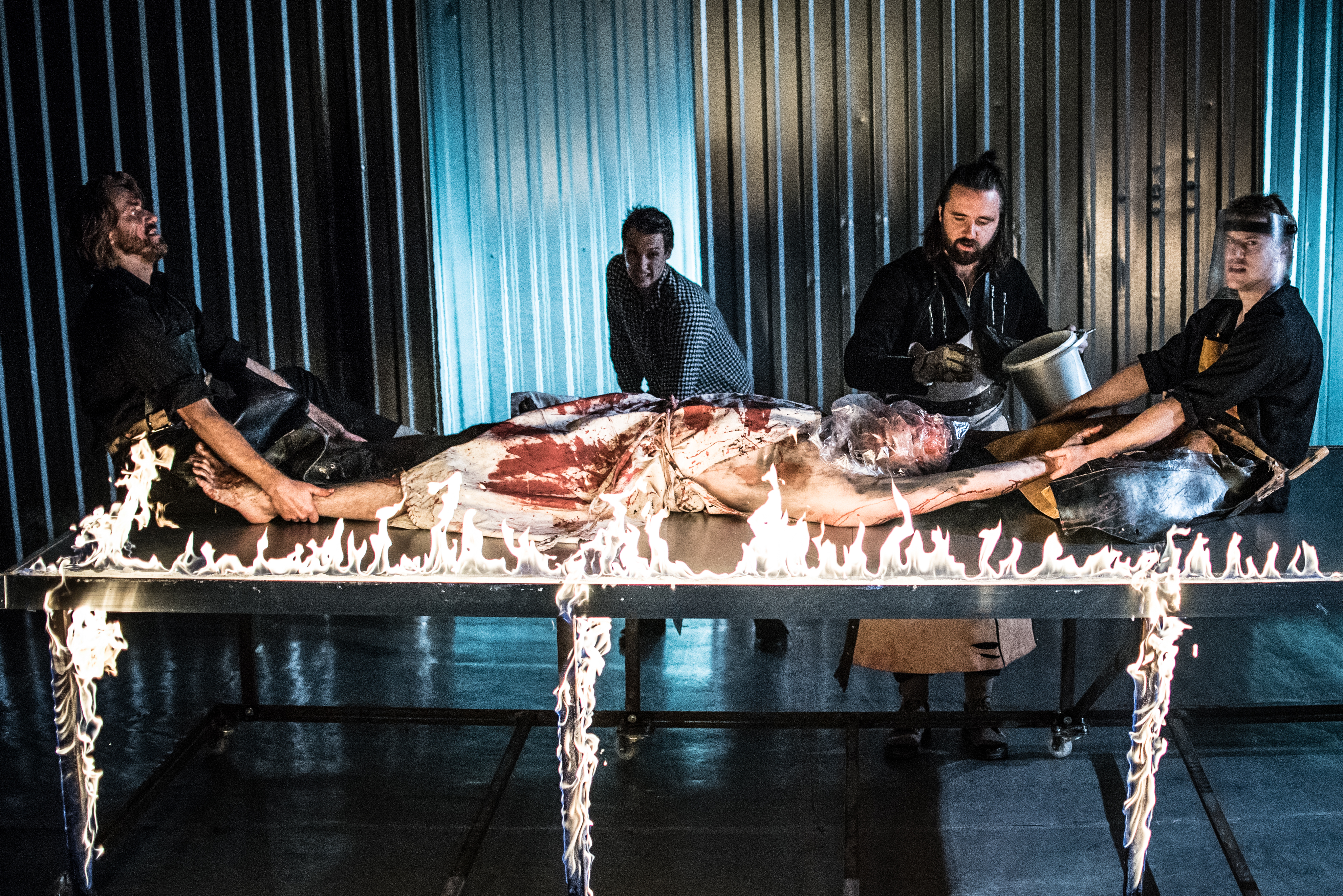
Spektakl według zapomnianego dramatu z 1908 roku autorstwa jednej z najbardziej kontrowersyjnych postaci międzywojennego dwudziestolecia, Adolfa Nowaczyńskiego – znanego z ostrego, niewybrednego języka. Sztuka opowiada o niezwykłym, choć niezbyt dobrze znanym epizodzie naszych dziejów, kiedy to w 1605 roku pomogliśmy zdobyć tron carski Dymitrowi Samozwańcowi I. Polacy na Kremlu jako zdobywcy i tryumfatorzy, dworskie intrygi i zderzenie skrajnie odmiennych światów Zachodu i Wschodu, polsko-rosyjskie zbliżenia i antagonizmy – to wszystko w oryginalnej opowieści, która łączy w sobie napięcie politycznego thrillera i dotkliwą aktualność.
W 2000 r. Jacek Głomb pokazał na festiwalu „Koriolana” Shakespeare’a. Spektakl prezentowany był w niesamowitych wnętrzach Fortu IV.
Czas: 2h (bez przerwy)
fot. Karol Budrewicz
Narodowy Teatr Dramatyczny/Teatr Miejski /Cankarjev Dom (Lublana/Słowenia)
Homer Iliada
Reżyseria: Jernej Lorenci
„Iliada” jest sceniczną realizacją epopei Homera. Reżyser zdecydował się na pracę ze stosunkowo nieliczną grupą (dwunastu) aktorów. Realizatorzy skupili się na słowie, narracji, rytmie, oraz na wykorzystaniu sfery dźwiękowej dla ilustrowania prowadzonej opowieści. Spektakl składa się z dwóch części: pierwsza wiernie oddaje oryginalny tekst Homera, stopniowo wprowadzając trzy światy „Iliady”: grecki, trojański i świat bogów. Druga część to wielka rzeź, którą była wojna trojańska: jej bitwy zlewają się w jedną tak, jak ofiary stają się jedną wielką wszechofiarą. Ważną rolę pełni tu muzyka, a ostatnia piosenka „We are going to die” pozostaje jeszcze na długo po spektaklu w głowach widzów. W przedstawieniu grają wybitni aktorzy ze Słoweńskiego Teatru Narodowego i Teatru Miejskiego w Lublanie.
Czas: 3h (1 przerwa)
Spektakl z polskimi napisami.
fot. Peter Uhan
27 maja (piątek)
(Santiago/Chile)
Roberto Farías, Pablo Larraín Dostęp
Reżyseria: Pablo Larraín
Sandokan jest sprzedawcą ulicznym. Handluje różnymi produktami w autobusie Transantiago. Historia Sandokana to opowieść o krzywdzie: o dziecku molestowanym, wykorzystywanym seksualnie przez księży i biznesmenów. Sandokan jako dziecko został umieszczony w SENAME (centrum reintegracji dla młodzieży), w którym stał się ofiarą przemocy i gwałtu. Te doświadczenia doprowadziły do jego nieodwracalnej demoralizacji. Żeby przeżyć, Sandokan musi coś sprzedać. Jednak czuje potrzebę opowiedzenia swej historii, żeby uzyskać DOSTĘP, dostęp do miejsca, na które w swojej opinii zasłużył.
Jego świat to kryzys, jego świat to siła, seksualność i miłość.
„Dostęp” to opowieść o współczesnym miejskim gladiatorze, o życiu, bólu i przyjemności, narkotykach i przestępcach, którą Sandokan opisuje językiem półświatka – świata, z jednej strony, potwornego, a z drugiej – poetyckiego.
Zapraszamy również na film „Klub” (El Club). Wspólnym mianownikiem filmu i spektaklu są reżyser, aktor i temat. A że temat jest ważny, udowodniła szanowna akademia przyznając Oskara filmowi „Spotlight”. 28 maja g. 12.00, CKK Jordanki
Czas: 55 minut (bez przerwy)
Spektakl z przekładem symultanicznym (słuchawki) na język angielski i polski

fot. Pablo Lorrain
Teatr Miejski (Rejkiawik/Islandia)
Anton Czechow Mewa
Reżyseria: Yana Ross
„Mewa” jest prawdopodobnie jednym z największych tekstów dramatycznych wszechczasów. Jest to wspaniałe połączenie komedii i dramatu. Traktuje o życiu jako takim, ale przede wszystkim o życiu poprzez sztukę, życiu w miłości i życiu bez miłości. Siemion kocha Maszę, Masza kocha Konstantina, który kocha Ninę, a Nina kocha pisarza, który kocha tylko siebie. Wszyscy w sposób beznadziejny oddają się sztuce. Są wśród nich artyści już uznani i ci, którym się nie udało, doświadczeni i naiwni, zaczynający karierę i ją kończący. Ta przeszywająca serce i głęboko zapadająca w pamięć sztuka jest słodko-gorzkim portretem człowieka zmagającego się z odwiecznym pytaniem: „Jak tu żyć?”. Czy ta historia brzmiała tak samo 100 lat temu w Rosji jak w dzisiejszym Rejkiawiku?
Yana Ross w Polsce wyreżyserowała „Koncert życzeń” Franza Xaviera Kroetza z wspaniałą rolą Danuty Stenki oraz „Jezioro” Michaiła Durnienkowa w TR Warszawa.
Czas: 3h (1 przerwa)
Spektakl z przekładem symultanicznym (słuchawki) na język polski

fot. Grímur Bjarnason
28 i 29 maja (sobota i niedziela)
Peeping Tom (Holandia/Belgia)
Ojciec
Reżyseria: Franck Chartier
Dramaturgia: Gabriela Carrizo
Ciepła i opowiedziana z humorem historia ojca. „Ojciec” rozgrywa się w domu starców, gdzieś głęboko w piwnicy. Pojedyncze okno jest umieszczone zbyt wysoko, by można było przez nie spojrzeć na zewnątrz lub je otworzyć. Jest jak znak określający zanikającą granicę między życiem i śmiercią. To przestrzeń poza światem żywych, lecz jeszcze nie zmarłych.
U starych ludzi czas wydaje się zwalniać i dostosowywać do spowolnionego rytmu ich gestów; elokwentna mowa może być odbierana jako bełkot, a muzyka jako hałas; obrazy się rozmazują, a sam świat wydaje się mieć jakiś sens, o ile uosabia wspomnienie czy projekcję umysłu.
Z goryczą zaprawioną dowcipem, „Ojciec” zgłębia proces dezintegracji ludzkich zdolności umysłowych, ukazując moment, w którym wyobraźnia lub choroba starca, współczesnego Don Kichota, stale grozi zepchnięciem realiów życia codziennego domu starców w odmęty urojonego świata wyobraźni.
Takiego spektaklu Toruń jeszcze nie widział. Mądry, dowcipny, poważny, ale z dużą dozą humoru. Aby mogło zobaczyć go jak najwięcej widzów prezentujemy dwa pokazy dzień po dniu. Zapraszamy!
Czas: 1h 30 (bez przerwy)
Spektakl z polskimi napisami
fot. Herman Sorgeloos
[:]